
The Broken AI Bargain

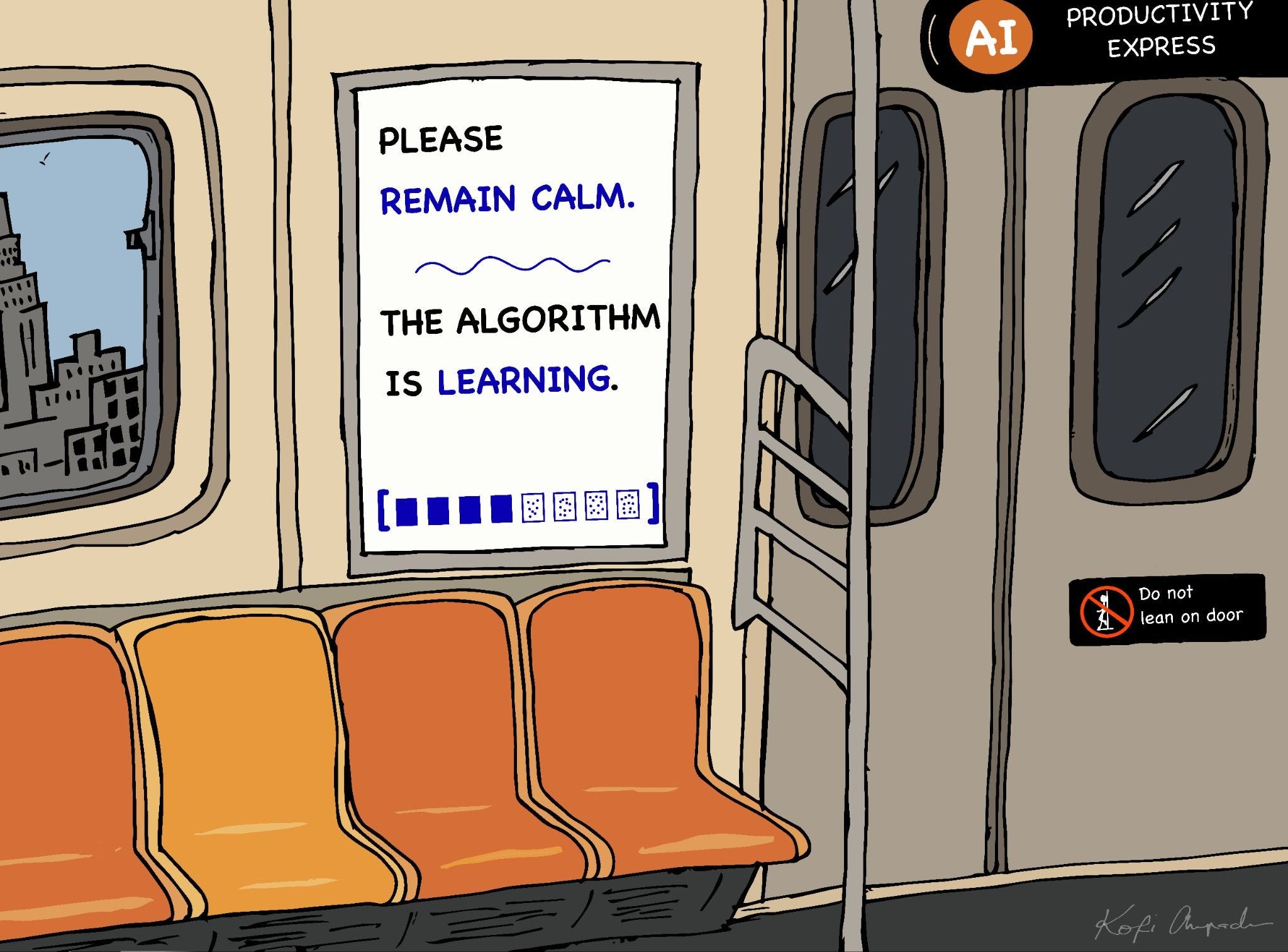
There were seven of us waiting inside the Verizon store, each carrying our own tech emergency.
My phone had suddenly stopped working a few hours earlier, transforming from a lifeline into a useless brick. Another customer had just moved into the neighborhood and needed their home wifi installed. Someone else was trying to recover years of photos from a damaged device. Whatever our issues, the mood at the store was tense and impatient.
To make matters worse, there was only one employee working. Fortunately for us, he handled the room like a master class in customer service. He acknowledged every person, validated frustrations before solving problems, and calmly diagnosed issues one by one without letting the anxiety escalate.
Walking out of the store with a replacement phone in my pocket, I started thinking about how mobile technology had quietly evolved from a consumer luxury into something that feels infrastructural. We rely on our phones for communication, banking, navigation, work, and transportation.
Is this the eventual path of all transformative technologies? Do they begin as conveniences before becoming necessities? And if so, is this where artificial intelligence is headed?
The Anxiety of New Technology
Looking back over the last two hundred years, we have seen several technological waves, from electrification to the Internet, that fundamentally transformed and improved human life. Almost every wave triggered a cycle of public skepticism and anxiety before eventual adoption.
When electricity began its mainstream rollout in the late 1800s, the occupational hazards were so severe that the mortality rate for early wiremen and linemen approached one in three. Commercial insurance companies refused to issue life insurance policies to electrical workers, while newspapers warned about the invisible, lethal risks of urban power grids. At the same time, companies like General Electric and Westinghouse Electric aggressively deployed lobbying campaigns and public relations efforts to convince regulators and an anxious public that a powered world would ultimately be safer and more prosperous. Public anxiety intensified in 1889 after a lineman was electrocuted in full view of onlookers in New York City. The backlash forced regulators to mandate stronger electrical safety measures.
Eventually, these safety standards matured, circuit breakers were introduced, and electrical infrastructure scaled. The net benefits of electricity proved transformative. The technology unlocked industrial productivity, enabled efficient mass production, and reshaped the physical constraints of cities through innovations like the electric elevator, which made the vertical expansion of dense urban environments like New York City economically viable.
More importantly, electricity represented an upgrade in human livelihood rather than a simple improvement in lifestyle. There is a significant difference between a technology that improves how people live and one that improves their odds of survival. Refrigeration radically reduced food spoilage and foodborne diseases. Electric water pumps improved sanitation. Reliable lighting extended productive hours and improved public safety. These were not consumer luxuries. They were infrastructure-level improvements that materially improved human welfare.
The Public Distrust of AI
AI, on the other hand, is still largely perceived as a lifestyle upgrade, not a livelihood necessity. AI currently seems less like refrigeration and more like a temperature-controlled wine cooler. It’s impressive, expensive, and ultimately optional.
Most people are not hearing about AI in the context of disease prevention, food security, or other livelihood improvements. They are hearing about productivity. But in corporate terms, productivity often means generating more output with fewer workers. Over the last eighteen months alone, there have been more than 170,000 AI-related layoffs. At the same time, the promises of AI have driven trillions of dollars into the financial markets, disproportionately enriching the households that already own the overwhelming majority of stocks.
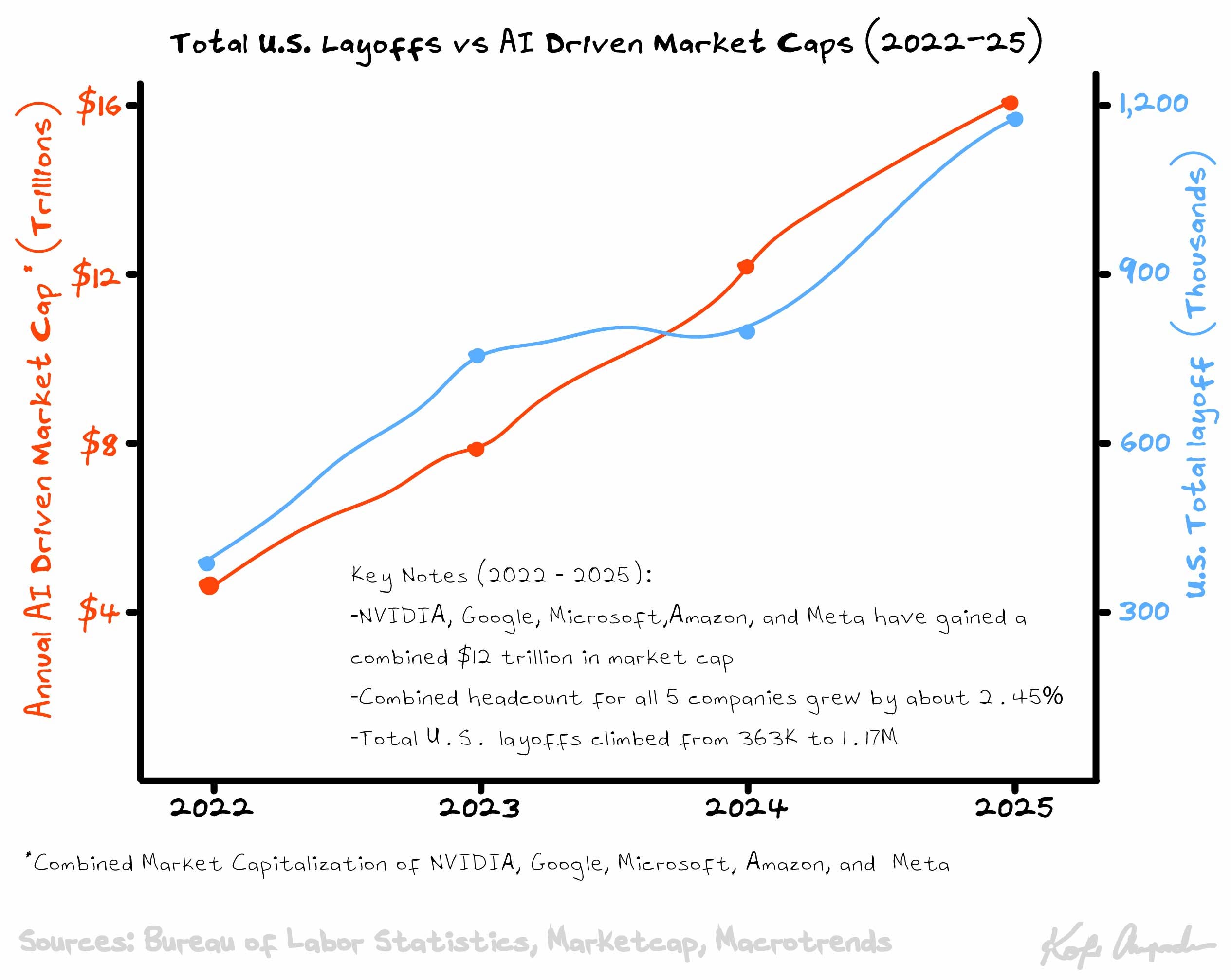
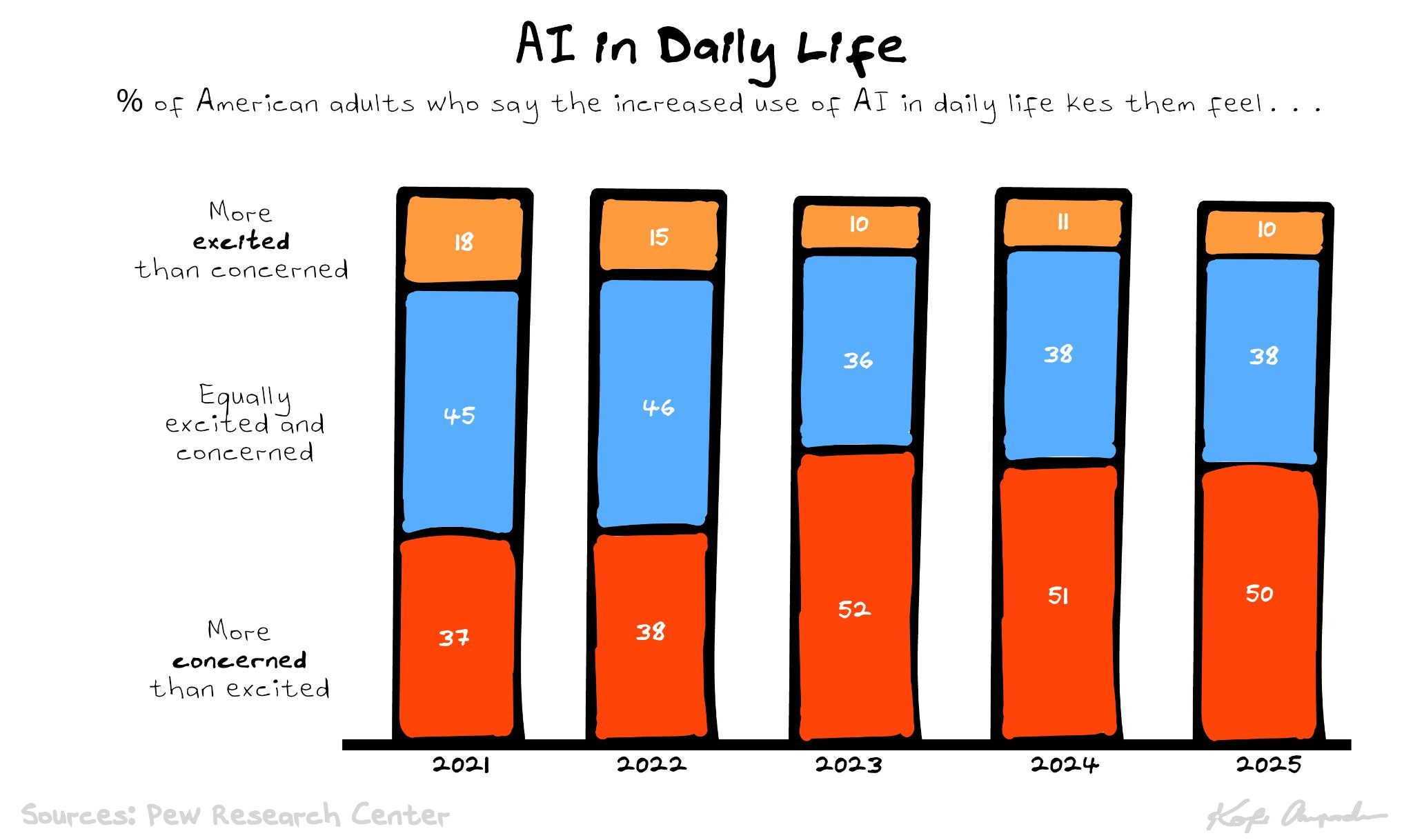
For many workers, AI increasingly looks less like a shared societal upgrade and more like a tool that boosts corporate efficiency while concentrating economic upside elsewhere. A 2025 Pew Research Center survey reflects this tension. The survey found that 50% of Americans were more concerned than excited about the increasing use of AI in daily life, while only 10% were more excited than concerned.
For the average person, the proposed AI trade sounds deeply one-sided. Surrender your data, your privacy, and potentially your job security in exchange for conveniences like faster data analysis or better email responses. There are also growing concerns about the enormous amounts of electricity, water, and data center capacity required to support large-scale AI systems. At a time when many households are already struggling with energy costs and a rising cost of living, it is not immediately obvious why AI would be an appealing social bargain.
Decades of sociological research show that convenience can spark early interest, but lasting societal adoption only happens when a technology materially improves stability, security, and resilience. The real question is not whether AI can make corporations more productive. It is whether AI can meaningfully reduce hunger, disease, and economic fragility.
Ironically, this is already beginning to happen.
AI Beyond Productivity
The United Nations World Food Programme developed HungerMap LIVE, an AI-powered platform that forecasts droughts, climate shocks, and food insecurity across more than 95 countries. By predicting where food crises are likely to emerge, governments and aid organizations can intervene earlier and reduce the lag between early warning and food delivery. AI-native agricultural companies are also using satellite imagery, weather data, and computer vision to assist in farming. These companies help farmers optimize planting schedules, detect crop disease earlier, forecast yields, and intervene before harvest losses become catastrophic. If electricity reduced food spoilage through refrigeration, AI may ultimately reduce food insecurity through prediction.
AI in healthcare may prove even more consequential. A nationally representative survey found that 25% of American adults have used an AI chatbot as a supplementary tool for their care. But the real value of AI in healthcare is as a scientific infrastructure layer. Google DeepMind’s AlphaFold system has predicted more than 200 million protein structures, dramatically accelerating biomedical research and shortening timelines for understanding diseases ranging from malaria to cancer. Predictive health companies are also using AI to identify patients at elevated risk of chronic illnesses before symptoms escalate, shifting medicine from reactive treatment toward preventative intervention.
The Tradeoffs of Essential Technology
None of these critical advancements eliminate the legitimate concerns surrounding AI. Labor displacement, surveillance, misinformation, energy usage, and concentrated corporate power are real risks. But history suggests that societies ultimately tolerate disruptive technologies when the net improvement to human livelihood becomes undeniable.
Mobile technology has become an essential infrastructure for modern life, but not without tradeoffs. Smartphones increased distraction, weakened privacy, accelerated misinformation, and intensified social comparison. Social media platforms built on top of the mobile revolution have fundamentally reshaped politics, mental health, and public discourse in ways society is still struggling to manage. Yet despite those concerns, mobile technology has been transformational in parts of the world where millions of people leapfrogged traditional infrastructure entirely. Mobile phones became bank branches for the unbanked, storefronts for informal merchants, logistics networks for drivers, and educational tools for students.
The same pattern may eventually emerge with AI. Electricity stopped feeling dangerous once life without it became unimaginable. Mobile phones stopped being luxuries once modern life began organizing itself around constant connectivity. AI is largely marketed as a productivity tool for corporations and a convenience tool for consumers, but those applications are unlikely to inspire broad public trust. The real turning point for AI may come when the technology is seen as instrumental to how populations stay fed, healthy, and economically resilient.
This was such an insightful and well-researched read! The initial pushback to electricity took me by surprise.
I think not at all transformative technologies are created equal. AI has tremendous potential I can get behind but the way it has been rolled out has been harmful (environmental impact, lack of guardrails for data centers, massive job loss, IP infringement and so on). The rapid evolution and adoption of AI without regulation feels like we’re in uncharted territory. It boils down to corporate interests driving AI rather than a mandate to improve human welfare. My question is what incentives are there for AI amplifiers/drivers to reset and center the public good?